 Sofia - Kyundestil, Rila, Melnik, Gotse Delchev, Dospat, Pompograd, Brachov Monastery, Plovidv - SOfia
 The wonderlands of Southwestern Bulgaria - near Dospat
Alexander Nevski Cathedral, Sofia
 A wild dog at a water hole in the Rodopi MountainsSofia - Kyundestil, Rila, Melnik, Gotse Delchev, Dospat, Pompograd, Brachov Monastery, Plovidv - SOfiaThe wonderlands of Southwestern Bulgaria - near DospatA wild dog at a water hole in the Rodopi Mountains


 A little bridge near Dospat


Yaman is a very sweet and popular evening Raaga. It is very vast
and can be explored endlessly without getting bored. Many teachers
start off their students with this Raaga, though that is not true in
Carnatic music where the Raaga of choice is Mayamalawagowla.

Evening Raagas employ the Teevra (Sharp) Madhyam for good effect.
The beauty of Yaman is the invisible presence of this note without
it actually being played till much later, thus building up a climax
of sorts. The eventual playing of this note brings great relief
and relaxation as though heralding the close of a long day.

In Yaman Kalyan, we see the presence of both Madhyams. Another
popular Raaga is Yamani Bilawal. This is an evergreen Raaga easily
deployed in Ghazals, Light Music and more.

Here is a description from an unknown book

"And so it refers to Pancham and begins again. Yaman floats within
and without. And like the pearl that Shuddha Nishad and Shuddha
Rishab hid, I see Teevra Madhyam! Present in its own absence, glittering
when invoked, I bow to this note. Tears have flown down from unseeing
eyes, ecstatic with happiness. My feet disappear, my legs grow numb,
and my hands waste away. I do not know what is above or below, left
or right. Nothing has meaning anymore, because everything now is
understood. I float in a pool of music. There is no thought of an end,
of the passage of time. God has mercy on me now and allows Pancham and
Shuddha Gandhar to veil this note again. And with a slow flourish,
the explanation for this act of mercy is given: Shuddha Nishad,
Shuddha Rishabh, Pancham, Shuddha Rishabh and Shadaj!

My daughter lies asleep in my bed, an unnatural glow radiating from her.
Her innocent heart has heard and understood Yaman better than I possibly
could. I look at her with loving pride.

The movement of life has altered my ability to understand music and where
I find references to reality in music and perhaps miss the point altogether,
she easily understands grander things without being awed!

Is there now a rhythm, a cadence? My heart mimics it in vain, hoping to
understand Yaman this way. My eyelids grow heavy; my ability to think has
been taken away. The notes of Yaman reduce everything to irrelevance.
Can I understand Shuddha Gandhar? Can I understand its twin, Shuddha Nishad?

My blood runs cold for a second as a fleeting understanding invades my
soul. Finding me unable to withstand its import, ignorance floods in again
and I feel only the peace that I can handle without any destruction. I
lift my numb arms to heaven, in hopelessness. Oh God! Why did you do this?

I see a smile on my sleeping daughter's face. Then she shifts in her sleep
and turns her face away from mine. God has spoken through her again and I
have been spared. The echoes of Yaman must diminish to a level I can
withstand."


Listen to Yaman

Shubra Guha - Yaman Kalyan

Rashid Khan

Girija Devi

Shujaat Hussain Khan (Sitar - very classy) Yaman Kalyan

Steve Gorn (yes!) Flute

Imdad Khan

Amir Khan

Bade Ghulam Ali Khan

Mohammad Hussain Sarahang

Aminuddin Dagar

Nasseruddin Sami

Ustad Halim Jaffar Khan - Yaman Kalyan

Malini Rajurkar

Pannalal Ghosh - the Definitive

D K Datar

Mehdi Hasan


Film Songs

One    Two   Three   Four

Five   Six   Seven   Eight


Cordially

VM

One speculates on the hypnotic power of music to create
mirages in the mind. Times of the day, intangible emotions
like love, sorrow and romance, seasons ... sound does it
all. Indian Classical Music has gone deep into the matter
and produced theory and practice that is thrilling though
ultimately dissatisfying (because its never enough).

Darbari is a Raag that alludes to the court or  the Darbar.
Its expression should recreate the ambience of a Royal Court
with pomp and grandeur. And in fact it does. How?

Its root, oddly, is from the Asavary "Thaat". Odd because
Asavary hails from the morning while Darbari is a
distinctly night Raag. But those are the oddities of the
weaker Taxonomy of Hindustani Classical Music, as compared
to the uncompromisingly more rigorous and scientific Carnatic
system. I digress.


The story is that Tansen, the court musician of Emperor
Akbar, created the Raag. Sounds plausible. The key to this Raag
is  the undulating "Dhaivat" a note that should be slow and
leisurely, especially in the lower octave. That is, the
"slope" between the dhaivaths needs to be very very low. It
is this expression of the note that causes a sense of
ponderous weight and therefore creates the atmosphere of a
court. Other signature groups are Nishad-Pancham,
Gandhar-Madhyam-Rishab-Shadaj.

Darbari is also referred to as "Darbari Kanada". Thats
because it also possesses a particular movement of the
Gandhars that is specific to what is the called the Kanada-
'ang'. Thats what you'll find common between Kausi Kanada, Abhogi
Kanada, Bageshri Kanada, Gara Kanada and Nayaki Kanada.

Nayaki Kanada is Darbari Kanada minus the Dhaivath, a
mystifying matter, but pretty effective. Its cadence is faster
and its exposition is in the middle octave.

Across the octave, transcending space and time, is Raag Adana,
popularized by Vani Jairam in this song.

So sit back and be the Emperor of all you survey. Listen to
Raag Darbari Kanada.


1. (Faster than I might have liked, but who am I to
  challenge this genius?) Faiyaz Khan
2. (The right tempo) Mashkoor Ali Khan
3. Ajay Chakrabarty
4. Adana by Mashkoor Ali Khan
5. Shakoor Khan
6. Alla Rakha - Sarangi
7. Adana by Amanat Ali and Fateh Ali
8. Darbari by the same
9. Sarod by Amjad Ali Khan
10. The MOST wonderful Darbari Flute you can ever hope to
hear. Pannalal Ghosh.
11. An odd mixture of the South and the North
12. A version by Jagjit Singh (not bad at all)
13. Salamat and Nazakat - consider death. Its a good idea.
14. John Higgins via the Carnatic angle.

Notice that women hardly ever sing this Raag. It does need
a deep and low voice for better effect. But Adana works well
for women artistes.

Regards

VM

ps: I know nothing about Classical Music. You can write
whatever you see above if you have the patience and desire to.

There are some Raagas of such great depth that mere lifetimes
reveal next to nothing. Bhairavi is one such and so are Marwa,
Shree and Darbari.

But Malkauns....if honey were to be distilled into music,
it would result in Malkauns. Such is the spectacular greatness
of this Raaga, such is its haunting addictive quality that
the body and mind writhe in agony, unable to tolerate
sheer wonder of such magnitude.

Here is Malkauns.

Why so? There are so many Pentatonic Raags. None produce
the narcotic effect as pronounced as Malkauns. A nearby Raaga,
Chandrakauns, is a mere half note away and cannot reach as
soul-plumbing depths, though it is brilliant. The sustained
genius of Raaga Malkauns may perhaps reside in the flattened
Gandhar, Madhyam, Dhaivat and Nishad. But of what use is
such analysis? If music goads the spirit towards spiritual
release, then listen only to this Raaga.

A performance can analyze the approach to each note from
countless directions, revealing new roads and new wonders.
I recall the lovely sight of the late Pandit Shymal Bose
demonstrating a fascinating composition in Malkauns to me
many years ago in his flat in Kolkata. Mathematics,
melody...how wonderful it was. His right hand waved gently
in the air as he followed notes as they emerged.
There was no Tanpura, no tabla. And how fantastic it was.

Only Kumar Gandharva made the bold attempt to introduce
the note Pancham in Malkauns but it is not possible for
most musicians to do so and get away with it.

Here is an extract from an my book, describing Malkauns
I rule over the emotions. I cause the deepest and gravest
feelings to swirl slowly around you, just as the Milky
Way with millions of stars moves imperceptibly around a
central point.

Komal Dhaivat gives peace, calm and order to the troubled
turbulent mind. The movement between notes is slow and
gradual, like an elephant bearing me as I survey my
Kingdom of lesser Raags. Each note blends into the next
without breaking. All that I do must show reason.
Nothing capricious can exist when I am sung.

Sing every note slowly and peacefully. All manner
of existence come to me with their own tale of sorrow
or joy and all are consumed within me. And so to one
I can appear to describe the flowers in a garden. To
another I seem to describe Nataraj performing his
shattering Tandav Nritya. To yet another, I describe
the beauty of the night. I am mature, all knowing,
suffused in wisdom from aeons past.
  Listen to more Malkauns compositions

Here's one

A Sarangi piece

Another one

Another One.

The Ultimate

My best wishes to all of you in 2007. May Malkauns be with you.

Cordially

VM

Today, for some reason, my thoughts have been full of my late
Guru, Pandit V G Jog. And someone dropped by out of the blue
after several years and handed me a CD of a couple of his All
India Radio recordings.

In articles about Gurus and other legendary figures, I have
observed that the writer often hints of himself or herself
as the Chosen One. Since I wasn't the Chosen One, that should
not be a problem. But bear with me if I mention myself a
couple of times if its relevant to the tale.

Pandit Jog was a wonderful man. He was born on February 14
1922 in Bombay. His mother was the first musical influence
on him, if I recall right. Thereafter, after learning vocal,
tabla and harmonium, he gravitated towards the violin and
made it big. I'll skip information you can easily find on
the net. Let me focus on the man and the Guru.

The difficulty with this man was that he could not turn away
students. His tiny music room in Kolkata was always full of
admirers and students and unknown drifters. The image that
remains is of a short, stout man sitting on a sofa, guiding
a student (or two) or writing sequences of notes endlessly.
A talkative and social man, you could always expect a joke
or amusing anecdote from him. He suffered fools (like me)
and lived a life immersed in an ocean of music not available
to us.

He would take students on stage and actually give lessons
in real time. There was no possibility of making errors.
That tenuous link of student and guru was possibly invisible
to everyone else; something ethereal marked the moment. A
communique via notes, via silence, a deliberately missed beat
...how can one explain that? Such magical moments are beyond
private - they are divine. Needless to say, the times I
played with him in public remain cherished memories, not so
much because I played in public but that he had faith in me.
I am sure my other fellow students had the same thoughts
when he called upon them.

Sometimes its tiresome to read endless praises about
someone. On the other hand, its easy to write endlessly
about someone one really loved and admired. I loved him
very much and he loved me in turn, as he loved all his
students. His brilliance as a teacher was mindblowing.
A gesture, an inflection in voice, a sudden digression
to explain an analog elsewhere; it was easy to be conned
into believing it was purely logical and simple. Such were
his subtle hints about Gara and Jaijaiwanti, the links between
Maru Bihag, Hamir, Alhaiya Bilawal, Gaur Sarang and more,
Bilaskhani Todi and Bhairavi. It does not matter that he
has gone, everything is vivid and will go when I do. The
foulest student could be polished into a maestro by such
a teacher.

I have avoided saying anything personal to which I was
privy. But I cannot help recalling with deep sorrow his
last painful years. It happened that I was in Kolkata as
he was sinking (though not at the end). Much was exchanged
as he drifted in and out of consciousness. His bright eyes
smiled for him as nature went ahead with her plans.

I was very lucky, of that I have no doubt. Guru, musician,
gentleman all rolled in one. That was Pandit Jog, whose
violin's sweet notes still remain in my heart. I wish
everyone the same fortune this Diwali.

I leave you with his Bhairavi.

Cordially

VM
I borrowed that title from a mind-blowing album of the same
name by the late Ustad Vilayat Khan.

I often hear deeply wrenching Raagas that leave me baffled.
Simple scales, a complex seeding of emotions in its patterns,
an infuriating dead-end in its analysis…well, you've got to
be there to really understand, otherwise I probably seem to
be talking nonsense.

Jhinjhoti is a fantastic Raaga that can cause a lot of
distress. Two other Raagas that do the same to me are
Charukesi and
Bhairavi but that's not for now.

Here is Jhinjhoti by Shubra Guha. Notice how the composition
is "off-beat" and also ends on the Shuddha Gandhar, talked
about below.

Nevertheless, let's move on. Jhinjhoti belongs to the
Khamaj root. Saying so implies the existence of Komal Nishaad,
which is certainly  the case. Shuddha Nishaad is rare,
though it can show up. But the pivot is Shuddha Gandhar.
Like a powerful magnet, it attracts all patterns a musician
might want to create such that the emphasis  is on that
note again and again. You just can't get away from it.
Many Raags have this 'annoying' problem and some mistake
it for a weary repetitiveness, which is far from the case.
Shuddha Gandhar has a powerful magic in many Raagas that
causes it seem almost primordial. It happens to be my
favourite note. You'll find its beauty in Charukesi too.
In Jhinjhoti, the note's beautiful counterpoint is the
drooping Komal Nishaad, though some would argue its the
Shuddha Dhaivat.

Like other Raags that sound good in a particular octave,
Jhinjhoti is beautiful in the middle one, that which comes
naturally.

This seems a particular favourite of the Vilayat Khan clan,
I think. I have heard pieces by Imrat Khan and others too.

I have a wonderful delicate Jhinjhoti piece of the late
Pandit Jog and Zakir Hussain which never fails to bring
tears to my eyes.

Here are examples
Small Raagas


There are a few Raagas which may be called 'small', for lack of
a better term. 'Limiting' might be another word option, but that
would wrong as well.

These Raagas have an implosive quality which tend to force a
performer to sound cramped. Playing this for more than a short
period causes a sense of deja vue, because it sounds like the
same sequence of notes is being repeated again and again. This
may be a flaw of the performer too, true, but something undefinable
in the Raaga serves to make it sound best when performed for brief
periods.

This is not a function of a number of the notes in the Raaga
at all; Malkauns and Bhupali are oceans despite having limited
notes. It may be a reflection of the movement within a Raaga;
you can only do so much.

Here are a few examples


Dhaani

This Raaga is a short step away from Bhimpalasi, a vast Raaga.
Dhaani misses the  Dhaivat and so the rendition of the Raag is
fraught with the danger of a performer slipping in that note,
because its so tempting. Listen to Bhimpalasi first; Click on
the last option  'Prabhu Tero Naam'.

(Bhimpalasi is a deeply moving Raaga - I read somewhere that
Ali Akbar Khan said it could make even animals cry. The structure
of Bhimpalasi is here. )
Desh - Sorath - Tilak Kamod


 In a previous post, I mused that Malhar seems to bring out the monsoon
season so swiftly. No wonder that Raaga was named such; no otherwould
have done justice to the rains.

The naming of Raagas must have been done by some very gifted and
blessed individuals. Take a look at Raaga Desh. Does the fact that the
word translates to 'country' or 'land' give the scale a patriotic tinge or
is it the other way around - that such a scale could only have been
named Desh?

Some thought leads me to believe that the extended Shuddha Nishadh
gives this Raaga a distinctive Patriotic flavour.


Here is an introduction to Desh - Shubra Guha.

The term 'pakad' (which Shubra speaks of briefly) refers to a
distinctive signature that every Raaga possesses. The awesome
Paluskar has a fantastic set of small pieces which present the
essence of each Raaga within a few seconds of beginning.

Here are more examples, each showing the power of music to
invoke (sometimes irrational) emotions in us. The Nine Rasas
(or emotions /feelings) are captured exquisitely in our music,
though of course, we would want to avoid music that invokes
fear and loathing in us (though it is possible; please visit me in
Bangalore and I shall play the violin for you. Fear will strike your
heart, he he).


Eftsoons a harsh day
A whirlwind of unheard pain
The love of a childA piquant summer
Suppression of all desire
Fragrance of Java
Irritants withal
a chance to reconsider
The comfort of timeGlacial Summers
Winter, many drops of sweat
An imploding mind
Now time moves backwards
Filaments of lonely words
A dying cactusIridescent love
A fraying Satin blanket
A blind hate consumes

Much too soon, the elegant end
arrives - detached, indifferent
 to the sounds of panic
  A welcoming cloak of finality
   about me; mixed feelings swirl
    Memories and dreams collapse.
     And point
      to a black hole in the future
       pulling,
        pulling,
         pulling

             And littered at the entrance,
         bouquets
            of black flowers,
         wilting to a dark sun's
            reluctant gifts.
         Smoky cadavers of the good
            and the kind
         Trampled and pushed aside
            For you see,
         in death too, evil wins -
            Annihilation is faster.

          I shall search for them
        in this darkness
       Those I had met in the light
      A desire mutated,
     by comforting solitude.
    Then I shall see, I hope
   A single sharp unending tone of beauty
  cleaving through the clouds
 I shall hold on to it
and ride in lonely comfort
into the darkness.
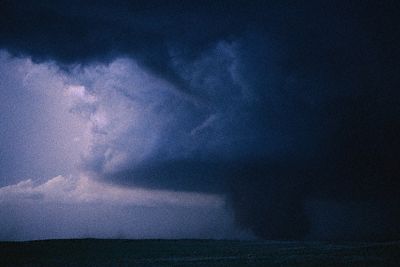
Black clouds, black edges
The future, a memory
Infinite blankness

          Troubled mind in grief
          Blue concave shapes of sorrow
          A lone eagle glides

Slippery roads glide
Mocking masks breathing contempt
Black dog licks cold feet

         Echoing jeers
         bounce off cold merciless walls
         Blossoms in concrete

The smell of wet blood
Malevolent bubbles form
A child holds my hands

         A fermenting thought
         An accelerating clock
         A welcoming void

How then shall this end?
cold steel disguised in soft words
The Eagle takes flight
What for should we visit Bangkok?
Its a truly great city. Quite clean for the most part but
turn a corner and there'll be this amazingly filthy canal,
absolutely black, stinking to high heaven. Otherwise there
are quite a few waterways and plenty offerries and many
transport options. The people are quite nice and there's
plenty to see.
So then, after an excellent time in coma at Peachy, we
decided to visit a few more sights. We had been forewarned
that there would be many confidence tricksters about.
We went down to the Chao Praya River Express dock to get
onto the ferry toTha Thien, the stop for the Wat Pho and Wat
Phre Kaew temples - and also the Palace. Along the way we
were accosted by a confidence trickster (who I asked for
directions - a mistake) who assured me that the Ferry stop
was closed and he would accompany us to the next place.
We ignored him. Sure enough, the ferry stop was right there
and functioning well.
It was a pleasant enough ride along choppy waters and we got
off without incident at Tha Thien. First stop - Wat Pho, famous
for its gold-plated reclining Buddha.
As we crossed the road to the Entrance, a gentleman accosted us.
"Wat Pho? Closed today. You come this way", he said, pointing
vaguely,far away.
We ignored him and walked on, which was good. The Wat Entrance
was Open. We bought our tickets and went in.
Here is a glimpse of the huge Reclining Buddha, an absolutely
mind boggling sight.
I decided to take a National Geographic-suitable photo of the temple and setup the angle and spoke for some time about perspectives, light, composition etc. I finally got the frame I wanted to. I clicked.
Sadly, the batteries had run out.
I purchased very expensive batteries and returned. But now it was raining, so I failed to get that once in a lifetime shot.
Onwards to the Palace and the Temple of the Emerald Buddha, both of which happened to be nearby.
Along the way we were accosted by many individuals who offered to show us the Emerald Buddha. We strode on.
As we turned the corner heading to the entrance of the palace, we found this huge sign
Entrance to Temple of Emerald Buddha
0.0 m (<---- zero point zero metres)
We had apparently reached. It seemed credible.
A smart lady and a smart guy came up and asked us what we wanted.
"We want to see Palace and Emerald Buddha", I announced.
"Closed today", said the man, shaking his head, grieving for me. The lady clicked her tongue, disappointed for us.
"Why?" I asked.
He pointed to his watch and said "Look at time! Now ceremonies. Closed!"
He laughed a gay light laugh, rubbing it in, incredulous that I didn't know this elementary fact.
It was 11 am and it seemed a strange time for ceremonies.
The lady said "No problem. I show you Standing Buddha. I belong to Royal Palace. Don't worry. Standing Buddha that way." She pointed to an area away from the Palace.
Smelling rats, we declined the offer and strode on, feeling sad that we had missed seeing the Emerald Buddha.
But wait, right in front of us were a bunch of tourists streaming in andout of the Palace gates. I was befuddled. I inquired with the guard and he waved me in saying "Tickets inside".
So evidently we had just escaped being victims of a rather brazen scam. (On a serious note, scam artists are really doing well in Bangkok, announcing the closure of attractions and then taking you elsewhere and getting you mixed up in buying fake gems. Here is a link to a story about exactly that.)
Wat Phra Kaew is the Temple of the Emerald Buddha within the Palace Grounds. It seems to have a very interesting history, having been found centuries ago and been taken away by marauding Laotian soldiers to Vientiene and then recovered after almost three centuries. The Buddha is actually made of Green Jade, not Emerald, but the name has stuck.
The Palace is quite fantastic with way too much to describe here. Worth mentioning are the Indian legends beautifully painted on all four walls. The Ramayana is particular is very important to the Thais. Here is an example of a mural. Its a scene from Ayodhya though I don't recall what it is about.
And here is a picture of the palace from an unusual angle.
Travelling to Siem Reap
Right after immigration in
On collecting your forex, IGNORE everyone who accosts you within the airport building, and head outside. You’ll find a public taxi stall, which is safer and better controlled.
Tell the guy at the counter you need to go to Mo Chit Bus Terminal and he’ll hail one of the dozens of cabs waiting and get you on the way. Mention clearly – Meter Taxi. The minimum is 35 baht. You will find that the meter would say about 100 bhat when you reach Mo Chit. You need to additionally pay 50 baht to the driver for the airport tax. On the way from the airport is a tollway that you can choose to take or not – the cab driver should ask you. He will ask you to pay 20 baht at that point.
That means that the journey from the airport to Mo Chit should have taken you about 170 Thai Bhat.
Once you get there, go INSIDE the building on the ground floor and proceed to counter 31 for the Aranyaprathet buses – this is the last town just before the border crossing into the Cambodian town of
The journey takes about 4 hours in a comfortable bus on smooth roads..
Let's assume you reach Aranyaprathet in the late evening or even at night. Head straight out of the bus station exit where you’ll see a few tuk-tuk guys waiting to pounce on you.
Your best bet is to ignore them if you are backpacking, as we did, and head due LEFT along the main road. After a longish walk of about 15 minutes, you should reach Hotel Thupthonckum (037) 21679, a large white building on your right.
The rooms are okay for the purpose and they have an adjoining little restaurant. We paid 300 baht for a double bed room.
Head out by 615 AM to the border crossing to the Cambodian town of
You should get to the crossing BEFORE it opens at
I hear Cambodian visas are easy to get at the border, but again, why take a chance. Get it before hand. Cambodian immigration seems to be modern and fairly fast. Once you are through, keep walking till you reach a small traffic island/circle. There is a free shuttle bus available to take you to the government transport area from where you should take a shared taxi to Siem Reap. A friendly Cambodian Tourism authority guy helped us to get there – free - and even put us in a shared taxi without cheating us - but that might have been our luck, so don't trust anyone. Shared taxi to Siem Reap should cost between USD 10-15 per person, or 45 for the whole taxi.
The road is extremely bad and you can be assured of at least one travel-sick co-passenger before you are through.
Though the shared taxi guy says he will drop you to your guest house, he may mysteriously say on arrival at Siem Reap (after 4 hours) that he has never heard of that place. Insist that he call them and they send their tuk-tuk guy before you exit the taxi and hand over the stub of your receipt to him (he will need that to get his money from the boss in Poipet). We stayed at a wonderful place called 
Ticket to Angkor Vat - $20 per day or $40 for 3 days. A photo is required, so take along plenty or you will have to pay quite a bit for local service. The sequence to visit Angkor Vat is usually this way
Day 0: PM: ticket formalities and issue of an ID card. Sunset at Phnom Bakhen.
Day 1: Bayon/Baphuon/Phimeanakhas/Palace of the Leper King/Terrace of Elephants/ Angkor Vat in the afternoon/evening
Day 2: Banteay Srey, East Mabon etc
Day 3: Phrea Khan etc.
Do not travel to Angkor Vat if you have a problem with heat, are not in good enough physical condition to walk very long distances in the heat and do not like heights. The stone steps in most temples are only about 6-8 inches across and ascend at a terrifying angle of 70 degrees or so. One slip and you’re gone.
50 Street 113 - Phnom Penh
Tel: (011) 854 430;
boddhitree_pp@hotmail.com
http://www.boddhitree.com
Avoid Dera Reang Seay Hotel, where we stayed the first night. Its absolutely horrible, though recommended by the PP Hotel Association or something. We ran out the very next morning and paid exactly the same amount ($10) for a much much better place (shared bathroom though with three other rooms).
A generally good idea is to hire a Tuk-Tuk for about $7 - $10 for the whole day. Always bargain.
Phnom Penh is a small town. To get from one place to another by a tuk-tuk should cost between 200o Riells to 6000 Riels (1 USD is about 4000 Cambodian Riels).
There are two main and busy markets in Phnom Penh - the old one Psar Thmey and the Russian market. You can get a lot from either of these places doing some fierce bargaining and being willing to walk away. We bought a Ta Khei, a traditional Cambodian instrument from the Central Old market.
There is a decent Indian Restaurant called Madras Cafe near the old market. Vegetarian options are few in Cambodia. Do not go by the recommendations of Lonely Planet in this department for sure. They have recommended a lousy place in PP which serves amazingly bad food.
Tuk-Tuk to the airport will cost you a standard $5 fro practically anywhere in PP. The airport is clean and modern and everything there is quite impressive. There is a $25 airport departure tax to be paid. Its 500 Baht at Bangkok.
Check out Air Asia for bargain deals ($10) between PP and Bangkok.


